Leave Your Message

Top 10 Best Trends in Dyestuff Industry You Should Know?

The Dyestuff Industry is experiencing significant transformations. According to a recent report by Grand View Research, the global dye market is expected to reach $48.8 billion by 2026, growing at a CAGR of 4.2%. This growth reflects the rising demand for textiles, coupled with eco-friendly initiatives. Experts, like Dr. Emily Whitaker, a specialist in sustainable dyes, have stated, "Innovation in the dyestuff industry is crucial for a sustainable future."

As brands seek greener options, natural dyes are gaining traction. Synthetic dyes still dominate but raise environmental concerns. Many companies are adopting biotechnological advancements. Innovations, such as microbial dyes, illustrate potential changes. However, the transition is not seamless. The overall industry must address resource consumption and waste management challenges.

Emerging trends are shaping the industry's future. From digital printing to color forecasting, these developments demand attention. As the dyestuff market evolves, it provides opportunities for growth and improvement. A balance between innovation and sustainability should guide the industry's path forward.
Top 10 Best Trends in Dyestuff Industry You Should Know?

Emergence of Eco-Friendly Dyestuffs in Sustainable Fashion

The fashion industry is undergoing a significant transformation. Eco-friendly dyestuffs are leading this change. These new dyes come from natural sources. They often use plants, minerals, and even food byproducts. This shift aims to reduce environmental impact, but challenges remain.

Many brands are eager to adopt these sustainable options. However, the color range can be limited. Bright, vibrant colors are harder to achieve with natural dyes. Some eco-friendly dyes do not perform as well as their synthetic counterparts. This brings about questions. Are we sacrificing quality for sustainability?

Consumers are becoming more aware of their choices. They want to wear clothes that reflect their values. Yet, there is still confusion about what “eco-friendly” really means. Not all natural dyes are harmless. Some can still harm the environment during production. Thus, transparency in the dyestuff industry is essential. Achieving true sustainability requires continuous improvement and innovation.

Top 10 Best Trends in Dyestuff Industry

This chart illustrates the rise of eco-friendly dyestuffs in the sustainable fashion sector over the past five years. The data shows a significant increase in the adoption of environmentally friendly dyes, reflecting a growing trend towards sustainability in the fashion industry.

Advancements in Digital Printing Technology for Dyestuffs

The dyestuff industry is evolving rapidly, particularly with advancements in digital printing technology. This technology allows for greater precision and creativity in color application. Digital printing enables companies to reduce waste, offering the flexibility to produce short runs of unique designs. As a result, brands can respond quickly to market trends.

Many businesses still rely on traditional methods and face challenges adapting to digital solutions. While the transition might be daunting, it can lead to long-term benefits. The potential for customization is significant. With digital technology, even complex patterns become feasible, opening doors to innovative designs that were previously impossible.

Tips for success: Start small. Test digital printing on a limited scale. Monitor the outcomes closely. Invest in employee training, as preparing your team for new technology is crucial. Embrace feedback and adjust processes accordingly. This adaptability will foster continuous improvement. Consider consumer insights to guide your design choices. In today's world, staying ahead requires constant learning and flexibility.

Popular Natural Dyes and Their Impact on Consumer Preferences

Top 10 Best Trends in Dyestuff Industry You Should Know?

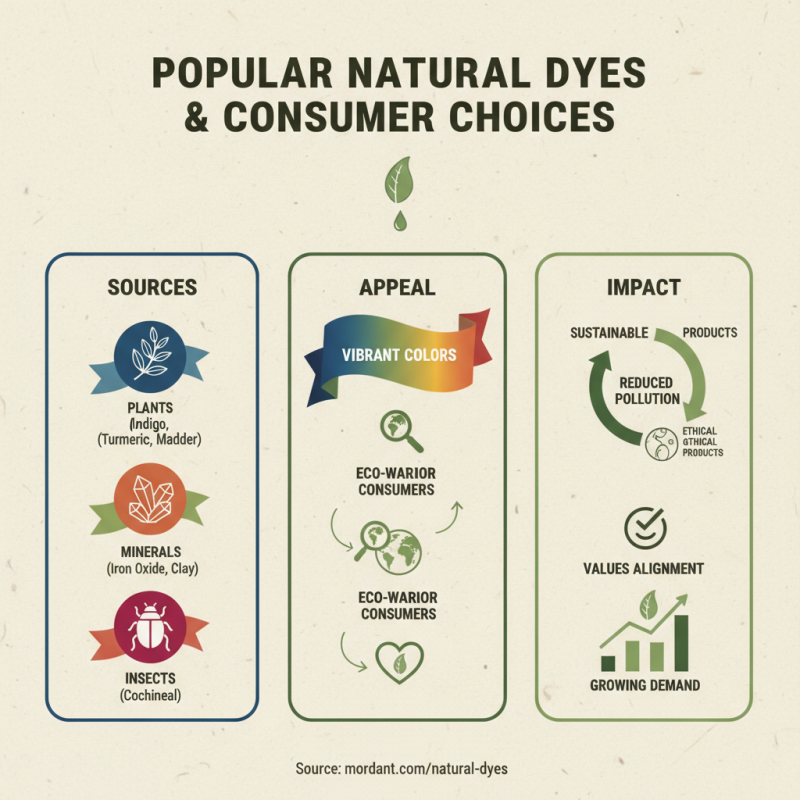
Natural dyes are gaining popularity. These dyes come from plants, minerals, and insects. Their vibrant colors draw attention. Consumers are increasingly aware of environmental impacts. They prefer products that align with their values. Sustainable practices in sourcing are essential.

There are challenges with natural dyes. Color consistency can vary significantly. This unpredictability can be frustrating for manufacturers. Yet, the uniqueness is appealing to many. Each batch has its own character, which consumers find intriguing. Traditional dyeing methods often require skill and time. This adds to the charm of products dyed naturally.

The shift toward natural dyes reflects changing consumer preferences. People are looking for authenticity in their purchases. Natural dyes can evoke a sense of connection to nature. They also carry stories of cultural heritage. However, more education is needed. Consumers must understand the true value behind these choices.

Innovations in Color Matching and Quality Control Techniques

In the dyestuff industry, innovations are reshaping color matching and quality control. Sophisticated software now assists in achieving precise hues. These tech tools analyze data, leading to accurate color formulations. However, many companies struggle to fully utilize these advancements. Understanding software capabilities is crucial.

Tips: To improve accuracy, implement training sessions for staff. Familiarize them with color-matching tools. Encourage an environment where employees can share experiences.

Quality control has also evolved. Real-time monitoring systems detect flaws during production. This proactive approach reduces waste. Yet, not all companies adopt these systems. Maintaining consistent quality remains a challenge.

Tips: Regular review of processes can identify gaps. Invest in training for staff on quality control measures. Create a checklist for consistency in production.

Top 10 Best Trends in Dyestuff Industry You Should Know

Trend Description Impact Future Outlook
Sustainable Dyes Focus on eco-friendly and biodegradable dye formulations. Reduces environmental impact. Increased demand for sustainable products.
Digital Color Matching Advanced software and tools for precise color replication. Improves efficiency in production. Higher adoption of digital solutions.
Quality Control Automation Implementation of AI and machine learning in quality testing. Enhances product consistency. More companies adopting AI technologies.
Natural Dyes Revival Re-emergence of dyes derived from plant and mineral sources. Cater to niche markets favoring organic options. Potential growth in artisanal markets.
Color Trends in Fashion Responsive color developments in line with fashion trends. Increases relevance in the fashion industry. Continuous evolution with fast fashion.
Functional Dyes Development of dyes with additional properties like UV protection. Added value to textile products. Growth potential in performance apparel markets.
Smart Textiles Integration of dyes in textiles that respond to environmental stimuli. Innovates consumer experience. Expanding market in wearable tech.
Personalization in Dying Processes Tailored dye solutions for individual customer needs. Enhances customer satisfaction. Growth in custom textile offerings.
Waste Reduction Techniques Technologies aimed at minimizing waste during the dyeing process. Improves sustainability metrics. Increasing regulatory and consumer pressure.

Rise of Bio-Based Dyestuffs in the Textile Industry

Top 10 Best Trends in Dyestuff Industry You Should Know?

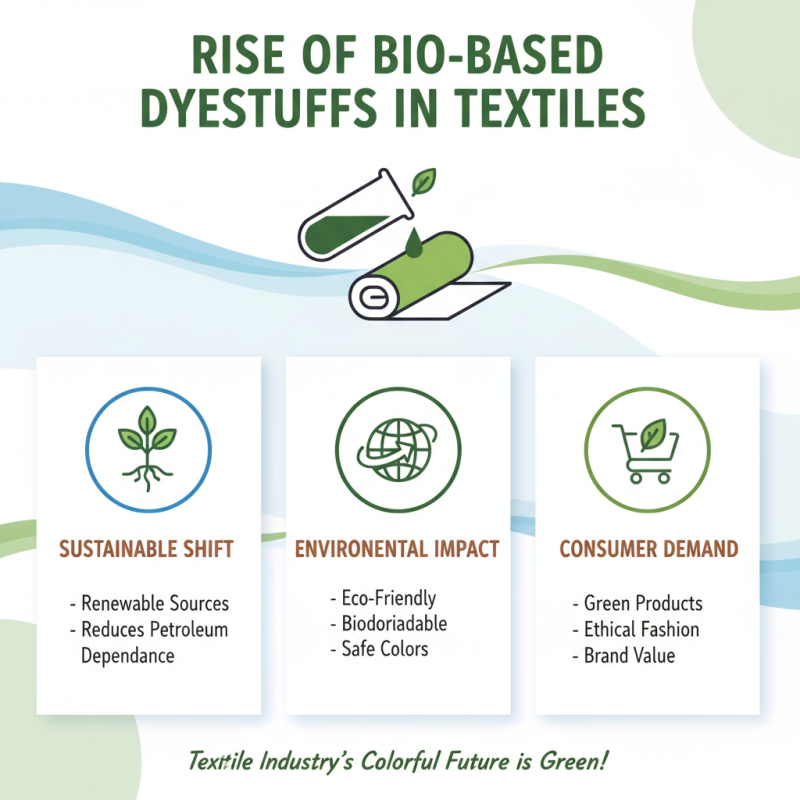
The textile industry is shifting toward sustainable practices. A significant trend is the rise of bio-based dyestuffs. These dyes come from renewable sources, reducing dependence on petroleum-based products. This shift not only supports environmental conservation but also aligns with consumer demand for sustainability. Many companies are exploring plant-derived colors that are safe and biodegradable.

Adopting bio-based dyestuffs can present challenges. Not all natural dyes produce vibrant hues. Some may fade quickly in sunlight or wash out easily. Thus, the quality of these dyes must be carefully evaluated. Overcoming these hurdles requires innovation and testing. Collaboration among manufacturers, researchers, and designers can help improve the performance of bio-based dyes.

**Tip:** When experimenting with bio-based dyestuffs, always conduct wash and lightfastness tests on fabric samples. This will help ensure durability in your final product.

Another factor to consider is cost. Bio-based dyes can sometimes be more expensive than synthetic options. Companies should assess if the benefits outweigh the higher initial investment. Consumers are willing to pay more for eco-friendly products, but pricing strategies matter. A clear communication of the value of sustainability is key.

**Tip:** Engage with customers about the sustainability journey. Sharing stories about sourcing can enhance brand loyalty and awareness.