Top 10 Uses and Benefits of Black Acid Dye in Textile Industry
The textile industry is constantly evolving. One of the game-changers in this sector is the use of Black Acid Dye. With a market size expected to reach $5.58 billion by 2026, dyes like these play a vital role in textile production. Their ability to create vibrant colors on protein fibers is unmatched.
Black Acid Dye offers several advantages. It provides excellent color fastness and is easy to apply in various dyeing processes. According to industry reports, acid dyes can achieve high brilliance and depth in colors for wool and silk. However, some challenges remain. The dyeing process can be complex and requires careful monitoring of pH levels.
Moreover, not all applications can accommodate Black Acid Dye. Its use might be limited in specific fabrics or under certain environmental conditions. Despite these difficulties, the benefits are significant. As the industry moves towards sustainability, innovations in dye technology could further enhance the use of Black Acid Dye. This brings hope for a more vibrant future in textiles, yet it also calls for a responsible approach to use.
Introduction to Black Acid Dye and Its Role in Textiles
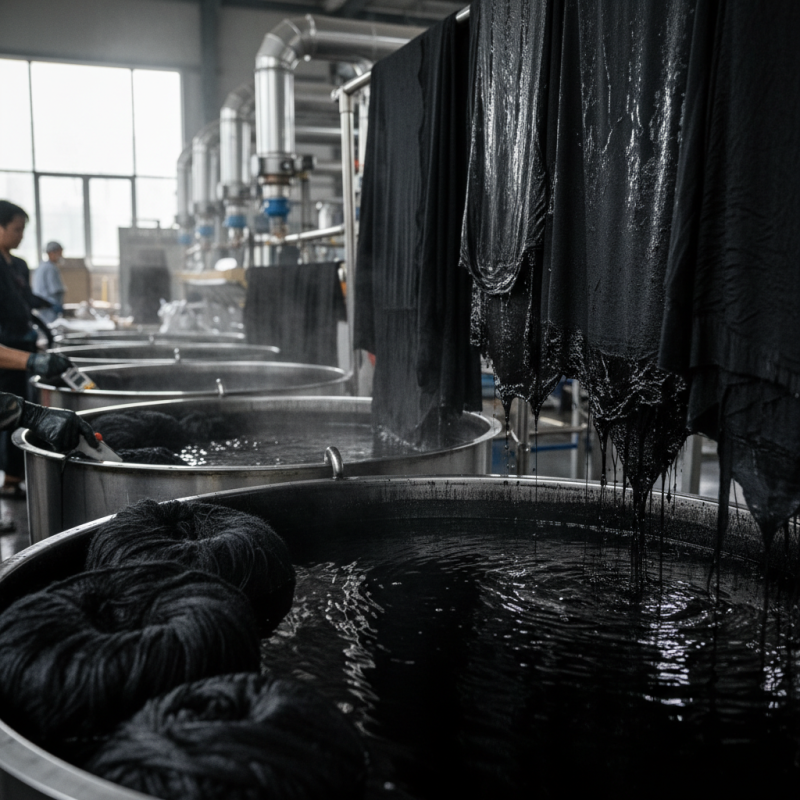
Black acid dye is a significant player in the textile industry. This dye is known for its rich, deep colors, which are highly desirable for various fabric types. It is particularly effective on protein fibers like silk and wool. The dye process is relatively simple, engaging, and allows for vibrant results. However, achieving consistency can sometimes be a challenge, requiring precise control over pH and temperature.
The role of black acid dye extends beyond aesthetics. It enhances the fabric's performance, improving its resistance to fading and environmental factors. This makes garments last longer, providing added value for consumers. While many appreciate the beautiful color, some textile producers find it difficult to handle the dyeing process. Techniques can require extra time and careful preparation. Textile artists often experiment, facing the challenge of achieving the perfect shade without overshooting.
Some sustainable practices have emerged in the dyeing process. However, the environmental impact of acid dyes still raises concerns. Not all methods are eco-friendly, and this is worth reflecting on. It’s crucial for manufacturers to consider both color richness and sustainability. Achieving a balance can lead to innovation in the textile sector, ultimately benefiting both the environment and consumers.
Key Properties of Black Acid Dye Affecting Textile Applications
Black acid dye is widely used in the textile industry for its vibrant color offerings. Its unique properties play a significant role in various applications. The dye is water-soluble and offers excellent adhesion to protein fibers, such as wool and silk. This makes it a preferred choice for dyeing textiles requiring rich colors and high durability. In fact, research from the Textile Research Journal indicates that black acid dyes can achieve up to 95% color fastness under various washing conditions.
Moreover, the pH level of the dyeing bath can greatly affect the outcome. Optimal dyeing occurs at a pH range of 4 to 6, ensuring brighter hues. However, pH imbalances can lead to dull colors or uneven dyeing. Many manufacturers struggle with this aspect. Consistency in dyeing is crucial, but even slight variations in pH can impact the final product's quality. The complexity of managing dye properties necessitates ongoing adjustments and quality control.
Another critical factor is the dyeing temperature. Elevated temperatures can enhance dye absorption but may also damage certain fibers. A study by the American Association of Textile Chemists and Colorists found that improper temperature settings can lead to significant losses in fabric strength. This indicates a need for careful monitoring during the dyeing process. Achieving perfect results remains a challenge, even with advanced technologies.
Top 10 Uses and Benefits of Black Acid Dye in Textile Industry
Top Industries Utilizing Black Acid Dye for Textile Manufacturing
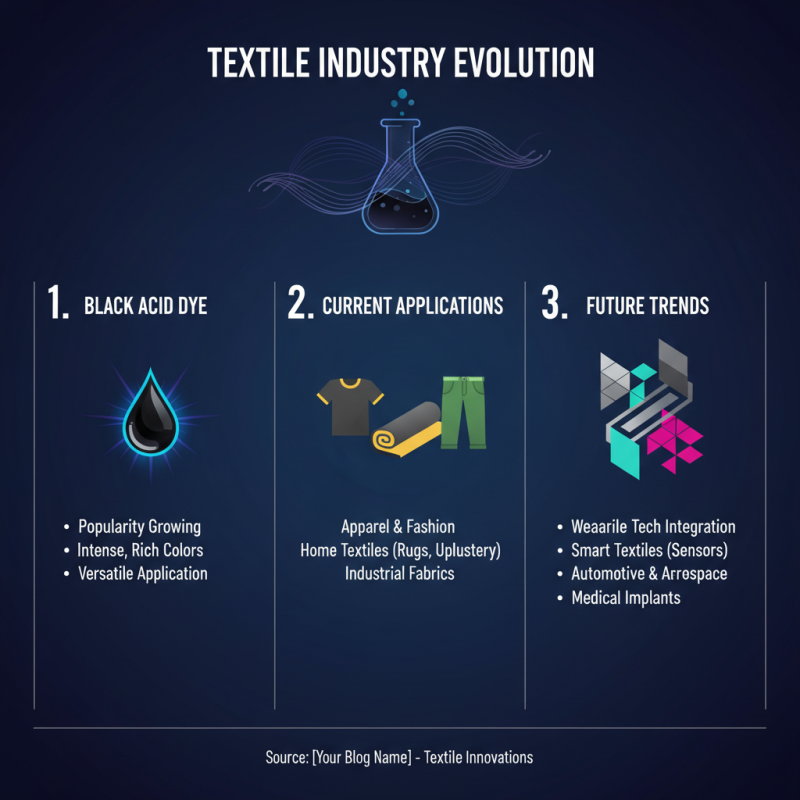
The textile industry is rapidly evolving, and black acid dye plays a crucial role. This dye is renowned for its deep, rich hues. Various sectors, including fashion, home textiles, and technical textiles, heavily rely on black acid dye. In fashion, black remains a timeless choice. Recent reports indicate that the global demand for black dyes in apparel increased by 15% in the past year.
Home textiles also benefit from this dye. Curtains, upholstery, and bedding require sturdy and colorfast materials. Black acid dye fulfills these needs, ensuring durability and vibrant color. In technical textiles, applications in automotive and aerospace industries utilize this dye for its robust properties. According to industry analysts, the technical textile market is projected to grow by 20% over the next five years.
Tips: When selecting black acid dye, consider fabric types. Not all fabrics absorb dye equally. Test on fabric samples before large-scale application. Additionally, proper dyeing temperature can enhance color uptake, leading to more uniform results. Ensure a clean workspace to avoid contamination, which can affect end color quality.
Top 10 Uses and Benefits of Black Acid Dye in Textile Industry
| Use/Benefit |
Description |
Industries Utilizing |
| Vibrant Coloration |
Provides deep and rich colors that enhance fabric aesthetics. |
Fashion, Home textiles |
| High Fastness Properties |
Offers excellent resistance to washing and light. |
Sportswear, Workwear |
| Versatility |
Suitable for various materials including wool, silk, and nylon. |
Luxury brands, Outdoor gear |
| Eco-Friendly Options |
Many formulations are non-toxic and biodegradable. |
Sustainable fashion, Organic textiles |
| Cost-Effective |
Reduces the overall dyeing costs due to efficiency in application. |
Mass production, Bulk textiles |
| Ease of Use |
Simple application processes in dyeing factories. |
Textile manufacturing, Boutique shops |
| Color Mixing |
Allows for custom color blends, enhancing creativity in designs. |
Fashion designers, Custom fabric shops |
| Improved Handling |
Dyes provide better fabric handle without compromising texture. |
Apparel industry, Upholstery |
| Compatibility with Additives |
Works well with different chemical additives for enhanced properties. |
Textile finishing, Functional fabrics |
| Market Demand |
Increasing interest in black dyes for trendy fashion items. |
Retail, E-commerce |
Environmental Considerations of Using Black Acid Dye in Textiles
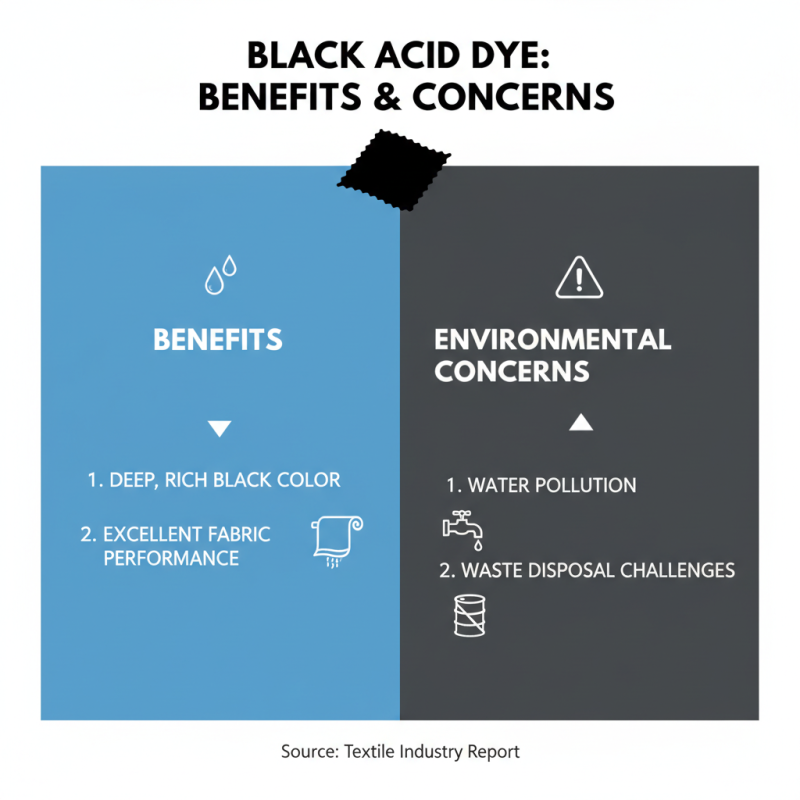
The use of black acid dye in textiles offers numerous benefits, but environmental concerns are significant. This dye is favored for its deep, rich color and excellent performance on various fabrics. However, the production of black acid dyes raises issues regarding water pollution. The dyeing process often involves large amounts of water, leading to waste disposal challenges.
Studies indicate that textile dyeing contributes approximately 20% of global industrial water pollution. A report by the United Nations shows that harmful chemicals in dyes can leach into waterways. This poses risks to aquatic life and disrupts ecosystems. The wastewater generated during dyeing sometimes contains toxic substances that are not adequately treated.
There’s a need for more sustainable practices in the industry. Some manufacturers are adopting closed-loop systems to minimize wastewater. Innovations such as using plant-based alternatives may reduce reliance on harmful dyes. However, these solutions are not yet widespread. The industry must confront its reliance on harmful chemicals. As consumers demand more transparency, brands face pressure to switch to safer practices.