Why Are Acid Dyes Essential for Textile and Leather Industries?
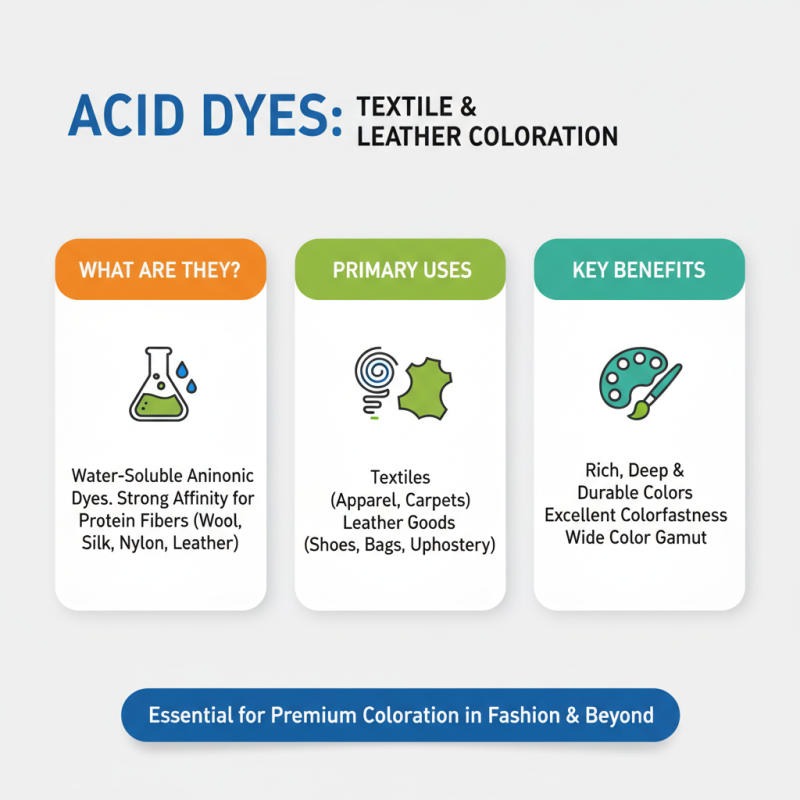
Acid dyes are vital in the textile and leather industries. They offer vibrant colors and excellent color fastness. These dyes are known for their ability to bond with fibers, making them ideal for various materials.
The use of acid dyes can bring out rich hues in wool, silk, and nylon. Many manufacturers rely on these dyes for consistent results. However, the application process can sometimes be challenging. Proper pH levels are crucial for achieving the desired shades. Mistakes in this stage can lead to unsatisfactory outcomes.
Despite their benefits, acid dyes can pose environmental concerns. Wastewater from dyeing processes can be harmful. This demands attention from industries. Balancing color quality with eco-friendly practices is essential. It’s a reflection of the industry's responsibility to innovate.
Importance of Acid Dyes in Textile and Leather Production
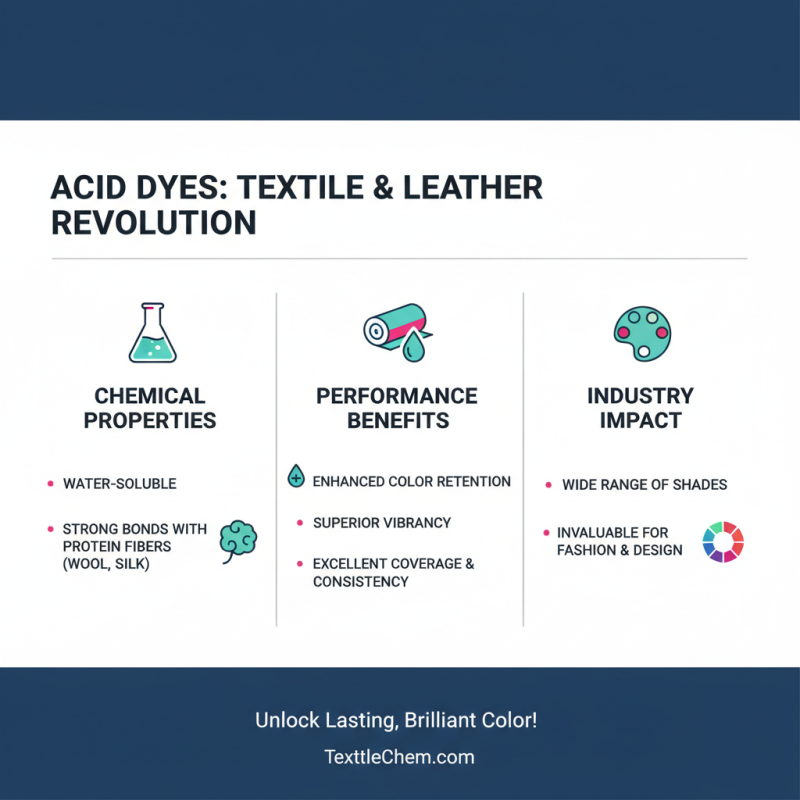
Acid dyes play a crucial role in the textile and leather industries. These dyes are water-soluble and have a strong affinity for protein fibers like wool and silk. Their vibrant colors provide rich and long-lasting shades. This is essential for achieving the desired aesthetic in clothing and leather goods.
The application of acid dyes is not without challenges. Different fibers react uniquely to these dyes, leading to variations in color intensity. Factors like pH, dye concentration, and temperature influence the final outcome. A delicate approach is often required to avoid uneven coloring. This demands a keen focus on the dyeing process, where even slight changes can lead to imperfections.
Sustainability is another area to consider. The environmental impact of dyes is a growing concern. Efforts are underway to develop eco-friendlier alternatives, but acid dyes are still widely used. The industry faces a responsibility to balance color vibrancy with eco-conscious practices. Greater awareness and innovative solutions are needed to address these issues in the future.
Comparison of Acid Dyes with Other Dye Types
Acid dyes are notable for their vibrant colors and strong bonding to fibers. They dominate the textile industry, especially for protein fibers like wool and silk. According to market research, the global acid dyes market was valued at around $1.2 billion in 2022. This indicates their importance in dyeing processes. They provide excellent lightfastness and washfastness, attributes highly valued in demanding applications.
In contrast, reactive dyes are often used for cellulosic fibers. They require specific conditions, such as alkaline environments, to fix properly. This limitation can lead to variability in color outcomes. Moreover, the market for reactive dyes is significant, but it pales in comparison to the acid dye sector. Comparatively, direct dyes are easy to apply but tend to have poorer light and washfastness. They account for roughly 18% of the total dye market, highlighting a preference for stronger, more durable dye options.
Acid dyes often outperform these other types in terms of versatility and application. However, challenges still exist. Not all acid dyes are environmentally friendly, and their disposal can pose problems. The industry is increasingly aware of these issues, pushing for more sustainable practices. Looking forward, there remains a need for improvement in the safety and environmental impact of acid dye processes.
Technological Advancements in Acid Dye Processes
Technological advancements in acid dye processes have transformed the textile and leather industries. Innovative techniques enable vibrant colors to penetrate fabrics deeply. This results in rich, long-lasting hues. A major breakthrough is the development of eco-friendly dyeing methods. These methods reduce water usage and minimize harmful waste.
The use of automated dyeing machines is becoming more common. They ensure consistent results and improve efficiency. However, challenges remain. Some machines still require manual adjustments and are not user-friendly. Training is essential to optimize their performance. Understanding the interplay between dye and fabric is crucial. Artisans must balance speed and quality, which is not always easy.
Moreover, new dye formulations are being tested. Some promise better color absorption, while others focus on reducing toxicity. Yet, achieving universal compatibility with all fabrics is complex. It requires ongoing research and collaboration within the industry. As the market grows, companies must adapt or risk falling behind.
Why Are Acid Dyes Essential for Textile and Leather Industries? - Technological Advancements in Acid Dye Processes
| Aspect |
Details |
| Type of Application |
Used for dyeing wool, silk, and nylon |
| Color Vibrancy |
Produces bright and intense colors |
| Fastness Properties |
Good light and wash fastness |
| Environmental Considerations |
Development of eco-friendly formulations |
| Technological Advancements |
Use of digital printing and application techniques |
| Market Trends |
Increasing demand for sustainable and safe dyes |
| Cost Factors |
Pricing influenced by raw materials and production costs |
Environmental Considerations in Using Acid Dyes
The use of acid dyes in textiles and leather has raised various environmental concerns. Many acid dyes contain hazardous chemicals that can harm ecosystems. When washing dyed textiles, these chemicals can leach into water sources. This contamination affects aquatic life and drinking water quality. It’s essential to consider the broader impacts of dyeing processes.
Manufacturers can adopt better practices to minimize these risks. Investing in water treatment solutions is one effective step. Regular testing of wastewater should be done. Some dyes might appear vibrant but can be environmentally harmful.
Here are some quick tips for safe dyeing practices. Choose dyes that meet environmental standards. Always dispose of waste properly. Educate workers about best practices. Small changes can lead to significant impacts. Adopting a sustainable approach to dyeing helps the planet while maintaining quality.
Environmental Considerations of Acid Dyes in Textile and Leather Industries