What is Liquid Indigo and Why is it Popular in 2026?
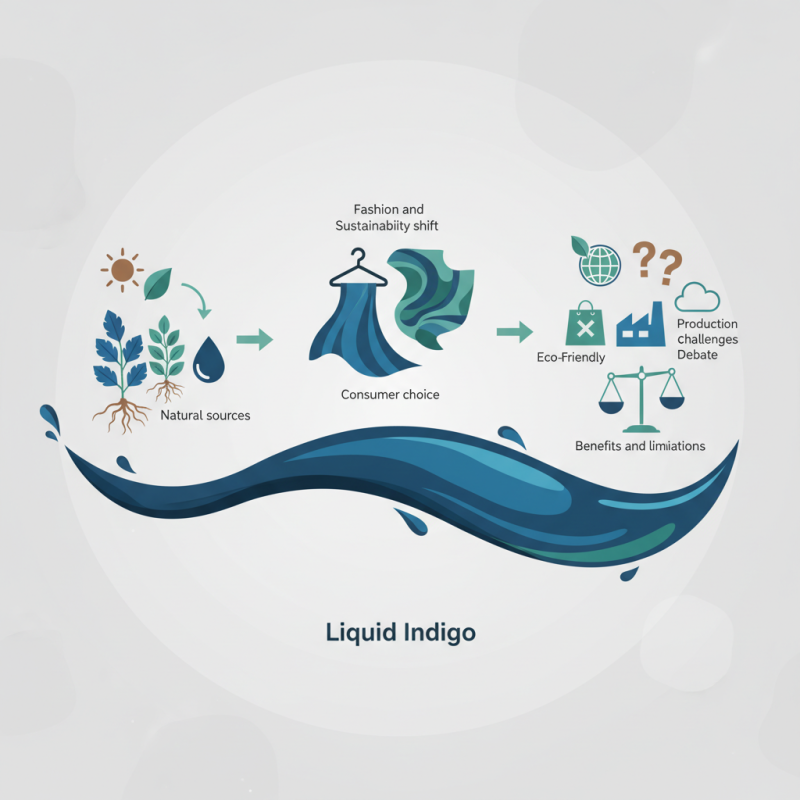
The rise of Liquid Indigo in 2026 is fascinating. This innovative dye reveals a shift in fashion and sustainability. Liquid Indigo has captured attention for its vibrant color and eco-friendly properties. Many brands now prioritize this unique material.
Liquid Indigo is a dye derived from natural sources. It offers a rich blue hue, rivaling synthetic dyes. This shift reflects a growing desire for sustainable products. More consumers are choosing environmentally friendly options in their wardrobes. Liquid Indigo aligns with these values perfectly.
Despite its popularity, Liquid Indigo is not without challenges. Some question its production process and environmental impact. Discussions about its sustainability continue to evolve. Understanding Liquid Indigo involves recognizing both its benefits and limitations in modern textiles. This awareness shapes consumer choices in a changing world.
Understanding Liquid Indigo: Definition and Properties
Liquid Indigo is a fascinating substance gaining attention in 2026. It's a vibrant, deep blue liquid, derived from indigo plants. This dye is used widely in textiles and art. Liquid Indigo offers a unique, vivid color not easily achieved with synthetic dyes. Its natural origin contributes to its appeal, particularly among eco-conscious consumers.
One notable property of Liquid Indigo is its versatility. It can be used on various materials, from fabric to paper. The dye is also known for its ability to create stunning gradients and effects. There's a certain unpredictability in the way it interacts with different substrates, which can lead to surprises in the final outcome.
**Tip:** When working with Liquid Indigo, start small. Test it on scrap materials before committing to a larger project.
Another interesting aspect is the dye's changing popularity. Trends fluctuate frequently. While Liquid Indigo is in vogue now, it may fall out of favor. Artists and designers continuously seek innovative uses, often requiring experimentation.
**Tip:** Keep an open mind. Embrace the unexpected results that come with using Liquid Indigo. This can lead to unique creations.
The connection to environmental sustainability further enhances its relevance. As more people prioritize eco-friendly materials, Liquid Indigo shines as a natural alternative to chemical dyes. The values behind the dye add depth to its aesthetic appeal.
What is Liquid Indigo and Why is it Popular in 2026?
| Property |
Description |
Importance |
| Color |
Vibrant blue can be adjusted through formulation |
Highly desired for fashion and textiles |
| Viscosity |
Medium viscosity allowing easy application |
Facilitates application in various mediums |
| Eco-friendliness |
Made from natural ingredients, biodegradable |
Appeals to environmentally conscious consumers |
| Application Versatility |
Can be used in textiles, paints, and cosmetics |
Widely applicable across various industries |
| Market Growth |
Steady increase in demand projected through 2026 |
Sign of a rising trend in sustainable colorants |
The Rise of Liquid Indigo: Historical Context and Trends
Liquid indigo has gained significant traction in 2026, emerging as a key player in the sustainable textile industry. The global market for natural dyeing methods is expected to grow by over 7% annually. Liquid indigo represents not only a coloring agent but also a symbol of eco-conscious production. Unlike synthetic dyes, it comes from a renewable source, making it attractive for environmentally aware consumers.
Historically, indigo has been used for centuries. Ancient civilizations utilized it for textiles, and its popularity has surged recently due to shifting consumer preferences. According to a 2025 report by a leading fashion market analysis firm, nearly 65% of consumers prefer products dyed with natural methods. This trend reflects a desire for transparency in sourcing and production processes. Yet, the transition to liquid indigo is not without its challenges. The extraction process can still be labor-intensive and expensive, leading some producers to hesitate.
Moreover, while the aesthetic appeal of liquid indigo is clear, there's ongoing debate about its accessibility. Can smaller brands scale up sustainably? Many artisans grapple with balancing craftsmanship and mass production. The rising demand for liquid indigo forces the industry to rethink traditional practices. As the trend continues to evolve, it highlights important questions about sustainability and the future of dyeing in fashion.
Applications of Liquid Indigo in Various Industries
Liquid Indigo has made significant strides in various industries, fascinating many with its versatility. This organic compound is often lauded for its deep blue color and sustainable production methods. In the textile industry, it is primarily used for dyeing fabrics. Difference is noticeable; traditional dyes can be harsh on the environment. Liquid Indigo offers a greener alternative, attracting eco-conscious brands.
In addition to textiles, this remarkable substance is finding a home in the cosmetics sector. It is being used in skincare and makeup products. The natural origins appeal to consumers seeking safer options. However, questions linger about its long-term effects on sensitive skin. Researchers are still exploring the full potential of Liquid Indigo in cosmetics.
Furthermore, its role in art and design is expanding. Artists experiment with Liquid Indigo as a pigment in various mediums. The vibrant hues create stunning visual experiences. Yet, the consistency and quality of the product can vary. Artists often need to adapt their techniques. This variation sparks creativity but also poses challenges for predictability.
Applications of Liquid Indigo in Various Industries
Health and Environmental Impact of Liquid Indigo
Liquid Indigo has gained popularity for various reasons in 2026. One significant aspect is its
health impact. Unlike synthetic dyes, Liquid Indigo comes from natural sources, reducing health risks. It is often used
in textiles and cosmetics. However, not all liquid indigo is created equal. Some methods still use harsh chemicals in production. This raises concerns about
skin irritation or allergies for sensitive individuals.
The environmental impact of Liquid Indigo also deserves attention. It requires less water than traditional dyeing processes. This is crucial for regions suffering from
water scarcity. However, the cultivation of indigo plants can lead to deforestation if not managed responsibly.
Thus, sustainable farming practices are essential.
Tips: Always check the source of any Liquid Indigo product you buy. Seek transparency in production practices. Support brands that promote
sustainable farming and fair trade. While Liquid
Indigo has benefits, it’s vital to remain cautious about its overall environmental footprint.
Future Perspectives: Innovations and Market Predictions for Liquid Indigo
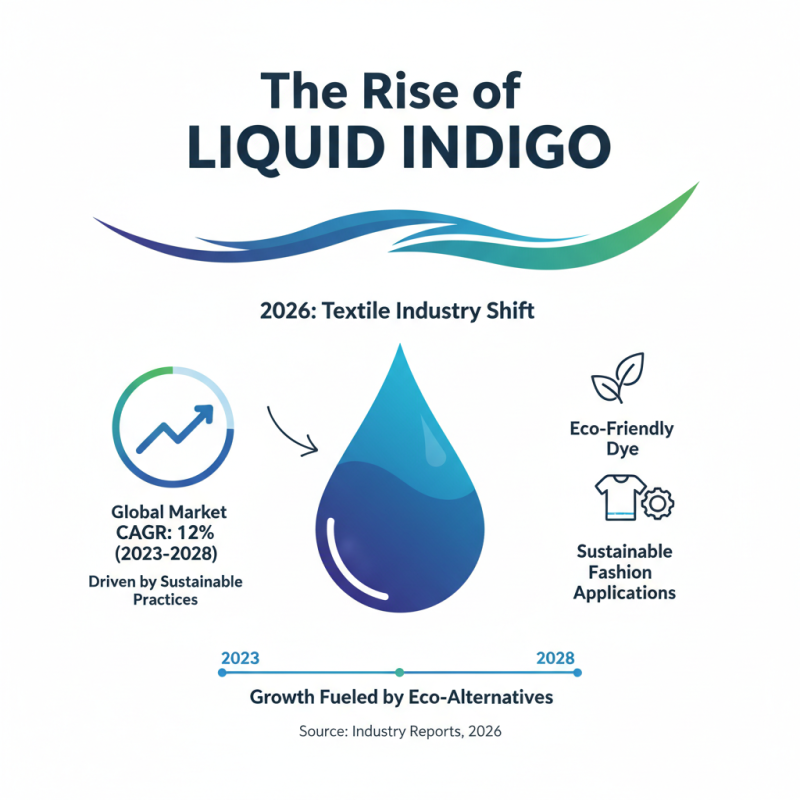
The rise of Liquid Indigo in 2026 marks a significant shift in the textile industry. Its unique properties make it a desirable choice for various applications. Reports indicate that the global market for Liquid Indigo is projected to grow at a CAGR of 12% from 2023 to 2028. This increase is driven by sustainable practices in fashion, as brands seek eco-friendly dye alternatives.
Innovations in Liquid Indigo production have led to cost-effective methods that minimize waste. The development of waterless dyeing technology is one such advancement. Data shows that consumers are increasingly favoring products that emphasize sustainability. In fact, about 70% of millennials prefer brands prioritizing environmental responsibility. Yet, challenges remain. Sourcing high-quality raw materials can be inconsistent and costly for manufacturers.
Market predictions suggest that Liquid Indigo will have a broader impact beyond textiles. The potential for its use in paints, cosmetics, and even electronics is immense. However, industry experts caution about the scalability of production techniques. There is a need for more research to enhance efficiency. Exploring these avenues could solidify Liquid Indigo's place in numerous sectors.